
What Emotional Safety Feels Like
Emotional safety are words buzzing around more and more. You might wonder what it means, or what it feels like. Emotional safety is deeply important in the context of any relationship and especially within your intimate or romantic relationship. It’s important to know what emotional safety feels like, but if you’re not experiencing it, you likely know…even if you can’t put your thumb on it.
Emotional safety is a multitude of experiences in your relationship.
It’s important to highlight that emotional safety doesn’t necessarily mean you always feel comfort in your relationship. You may still have disagreements, hurt feelings or other ruptures that come from conflict. Difficult experiences within your relationship – and uncomfortable conversations are often very healthy parts of growth. You can experience more closeness with your spouse or partner, when you’ve repaired the issue or ruptured at hand. 
Emotional safety doesn’t mean you won’t experience disagreement in your relationship. When you’re emotionally safe however, you can be honest about the hard stuff without fear of backlash. You can share disappointments, big emotions like deep sadness or frustrations. It’s possible – and important – to share needs you might have, or boundaries that feel helpful.
When you’re in an emotionally safe relationship, you can be honest.
A lack of emotional safety comes when you fear sharing what’s important to you because you’re afraid you’ll be mocked, abandoned, or possibly punished. Punishment could be psychological, emotional or other harmful treatment as a result of your expression of needs. If your spouse or partner becomes significantly defensive and there’s never an opportunity for a difficult conversation, you could be experiencing lacking emotional safety.
Defensiveness is a common response during rupture or conflict.
It’s not defensiveness in and of itself that is the problem, it’s when defensiveness inhibits any opportunity to repair. You should feel seen and safe within your relationship. You need to be able to express your feelings and not feel they are minimized. Defensiveness often makes the partner on the receiving end feel small. This is not an emotionally safe experience. It’s important that you, your feelings and your experiences are heard. A healthy interaction within any relationship is the practice of holding space for one another.
Holding space for another, is similar to create opportunity for your partner to honestly share.
Emotional safety happens when your feelings are taken seriously. Your partner might not fully understand what’s happening for you. They want to though. This is where holding space creates safety. For you to be able to share and vulnerably express what’s happening is deeply important. When you’ve had a traumatic experience or were raised in a home that was emotionally unsafe, you need these healing experiences. You need to feel that what’s happening is valid, and that it’s true for you. You’re not judged or made to feel wrong or shamed.
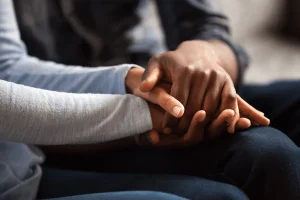
When you feel calm – your shoulders are dropped, you are breathing well, you are present…that’s a strong indicator that you are emotionally safe. It’s important to notice whether your dysregulated nervous system feels unsafe because of past traumatic experiences, or because of the current situation and relationship. If you were raised in a traumatic environment, it’s common that your nervous system would feel unsafe simply because that’s what it’s familiar with.
Does your current partner sit with you and calmly stay?
Do they stay curious? Can they simply be with you in this hard moment or conversation? That’s a beautiful indication of a safe relationship. Do they wait until you’re ready to share and are they willing to repair and have conversations to understand what’s going on for you? And, can you then extend that to them? This is emotional safety. It is an experience that, over time, cultivates trust in yourself and in your partner. This is healthy and this is healing.
If you’re struggling within your relationship, you’d like to explore more about emotional safety or you’d like to start your healing journey, reach out! I’d love to connect in-person in Langley or online for a virtual appointment anywhere in BC. Book your consultation or first appointment!